
IN LOVING MEMORY OF
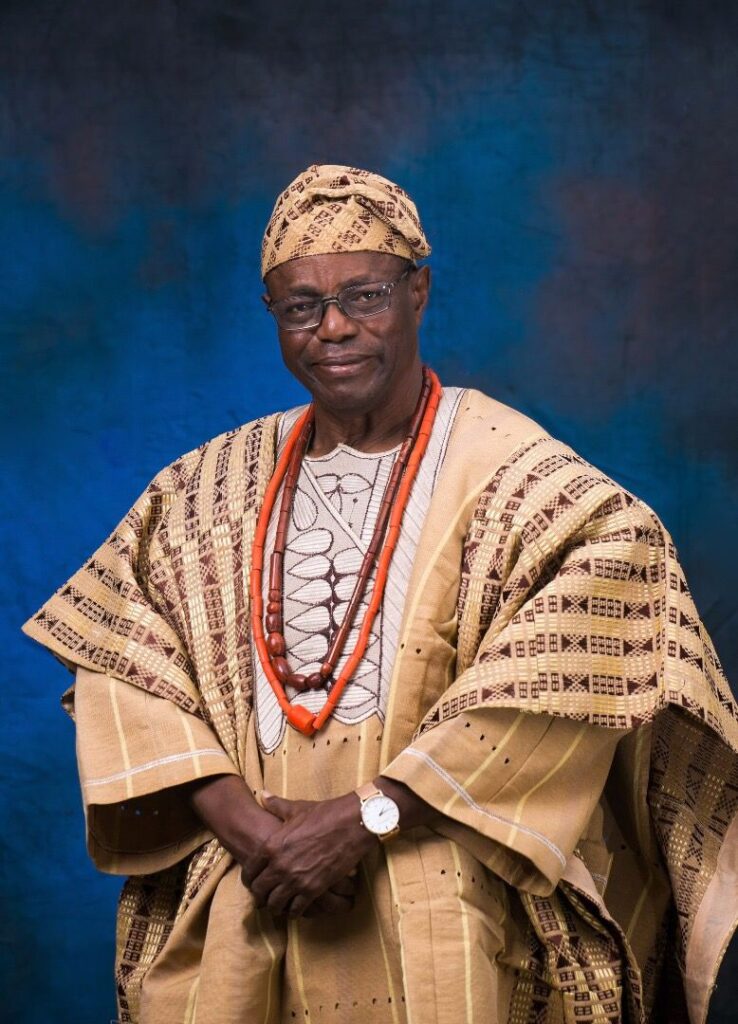
Chief Jolasanmi Olaleye Akande Falore
6 October 1947 - 21 April 2026
"A life well lived, a heart deeply loved, a legacy forever remembered."
Chief Olaleye Falore was a man of integrity, wisdom, and compassion. He lived a life committed to his faith, his family, and the service of humanity. His legacy continues to inspire generations.
Early Life
Chief Ọlalẹyẹ Fálore was born in Ilesa to the late Pa Moses Oni Ayeko Falore and Madam Alice Basola Falore. He was raised in a disciplined and culturally rich Yoruba family environment that nurtured his strong values of integrity, education, hard work, and respect for tradition.
Career
He built a distinguished career spanning teaching, geology, engineering consultancy, and lecturing, contributing meaningfully to education and developmental projects across Nigeria.
Family
A devoted husband, father, and family man, Chief Fálore cherished strong family bonds and raised his home on the foundations of love, discipline, Christian faith, and mutual respect.
Legacy
Chief Ọlalẹyẹ Fálore will be remembered for his integrity, wisdom, scholarship, cultural pride, mentorship, and the lasting impact he made through his life, writings, and service to humanity.
PHOTO GALLERY
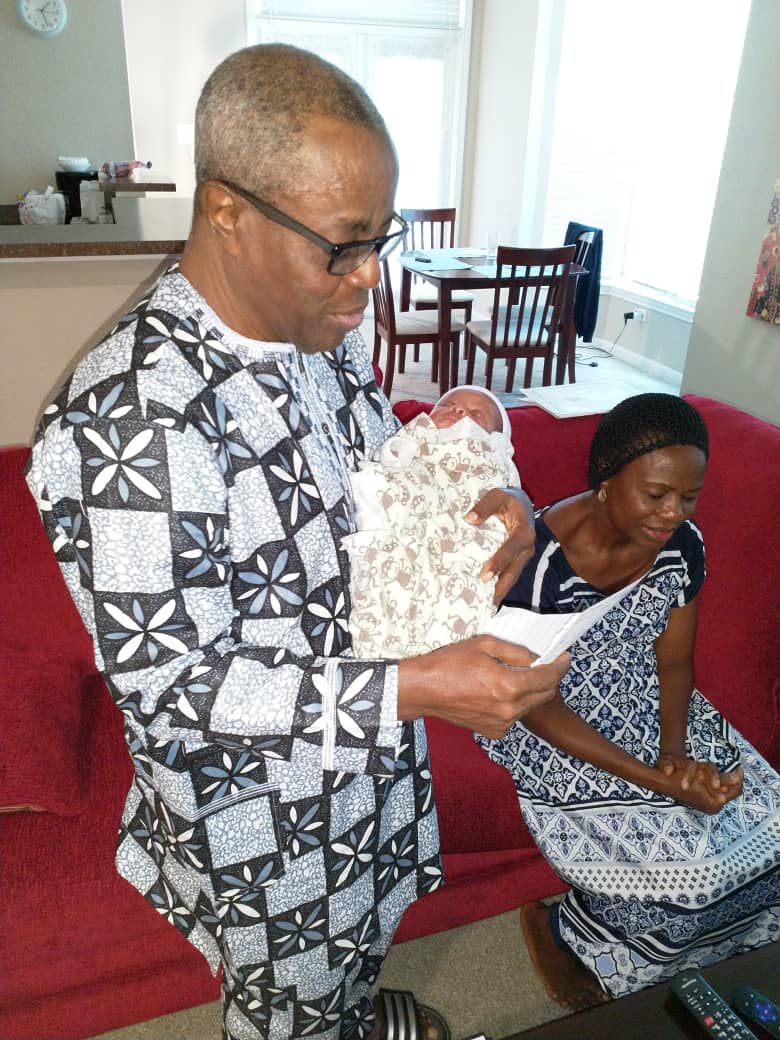
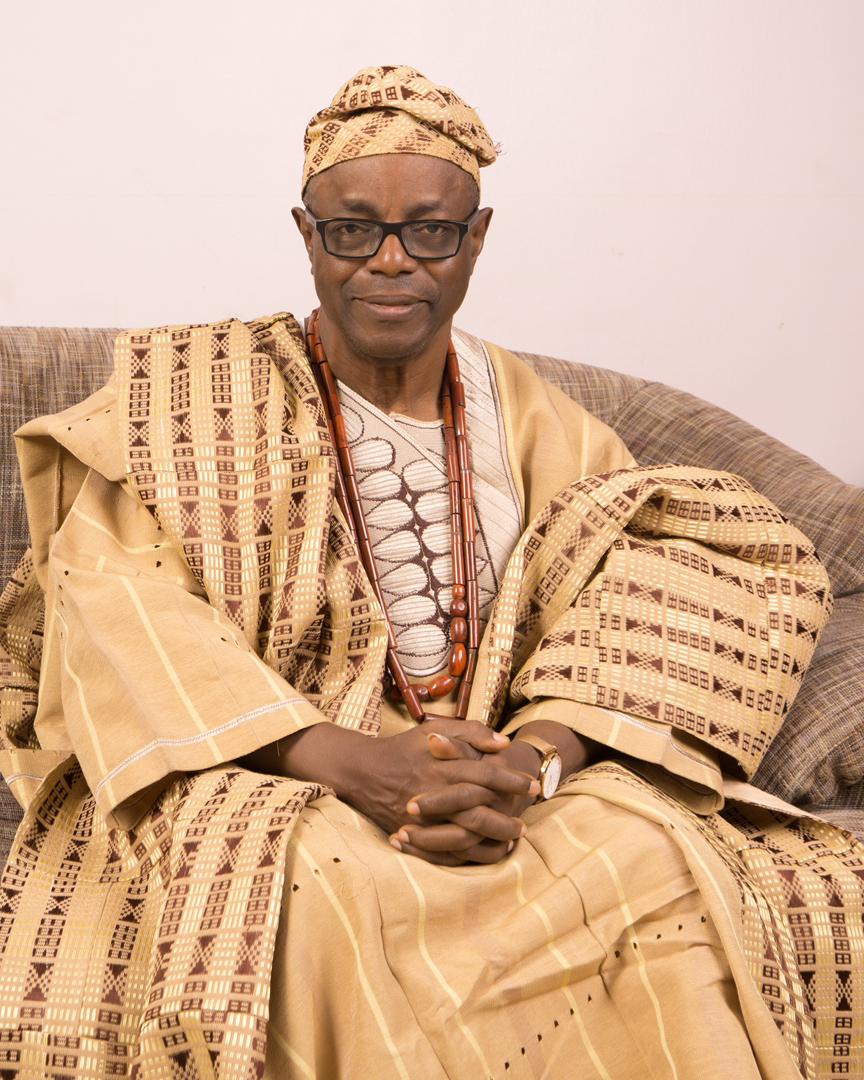
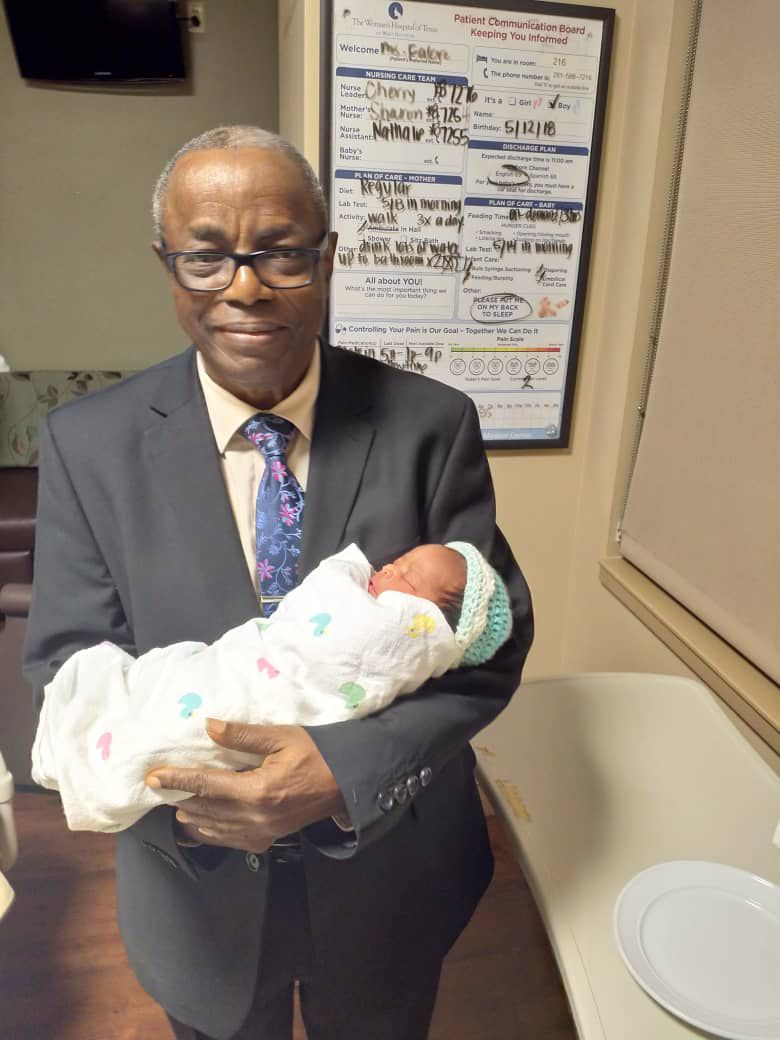
TRIBUTE WALL
A Tribute of Love and Thanksgiving
“What shall I render unto the Lord for all His benefits toward me? … I will take the cup of salvation and call upon the name of the Lord.” (Psalm 116:12–13)
All I have to say is, “Thank You, Lord.”
Thank You, Lord, for the privilege of sharing forty-eight blissful years of marriage with my beloved husband. Our journey began on 25th March 1978 and, according to God’s perfect will, came to an earthly end on 21st April 2026.
When we embarked on this journey together, we had no idea what the future held. Yet, by the grace of God, He led us every step of the way. Like every marriage, we experienced seasons of joy and moments of challenge, but the Lord faithfully carried us through them all. Together, we learnt to trust Him, to love each other more deeply, and to place our hope continually in Him alone.
To the glory of God, Jolasanmi was a devoted husband and a truly remarkable man. He was far more than a husband to me, he was my closest friend, my brother, my protector and my confidant. He believed in me, encouraged me, and supported me in pursuing the dreams God had placed in my heart.
He lived a life marked by purpose, integrity and unwavering faith. He was a beautiful soul, constantly grateful to God for the precious family with which He had blessed us (our children, our grandchildren and me). His life was a testimony of God’s faithfulness.
One of the qualities I admired most was his uncompromising character. He would never go against his conscience or compromise his convictions simply to please others. Once he was persuaded that something was right, he stood firmly by it with courage and dignity. His principles were not negotiable, and he earned the respect of all who knew him because his life consistently reflected the values he professed.
My dear husband, thank you for the beautiful life we shared. Thank you for the countless memories, the laughter that filled our home, the care you so generously gave, and the steadfast, unwavering love that sustained our family through the years.
Though your physical presence is no longer with us, your love, your values and your legacy will continue to live in our hearts and in the generations that follow.
I thank God for the gift of your life and for the privilege of walking this earthly journey with you.
Until we meet again in the presence of our Lord and Saviour, sleep on in the bosom of your Maker.
Your loving wife, always.
Tribute to My Dear Dad
Dear Dad
Writing this tribute has been one of the most difficult things I have ever had to do. Even now, I am still trying to come to terms with the reality that you are no longer with us.
There is very little I can say that has not already been said by so many others. Many have spoken about your brilliance, your versatility, your professionalism, your competence, your integrity, and your unwavering diligence.
Every one of those tributes is true. But to me, you were much more than those admirable qualities-you were simply Dad.
You were a jovial, approachable, and down-to-earth man, yet one who never compromised on principles. Growing up, there were standards you expected us to live by. I still remember your rules: no eating between meals, no resting your elbows on the dining table while eating, and if you could not afford to own a car, you had no business driving one. At the time, they seemed like ordinary household rules. Today, I understand that they were lessons in discipline, self-control, responsibility, and contentment.
You took our education seriously and made it one of your life’s greatest priorities. You were determined that each of your children would attain the highest level of academic and professional excellence. Yet, despite your own distinguished career, you never imposed a particular course of study or career path on any of us. Instead, you gave us the freedom to discover our own passions while providing unwavering encouragement and support every step of the way.
One piece of advice you gave me has remained a guiding principle throughout my life. You would often say,
“Whatever career you choose, make sure it is one you can eventually establish on your own.” That simple but profound counsel shaped many of the decisions I have made and continues to influence me today. Looking back, I now appreciate the wisdom behind those words. They were not merely about entrepreneurship-they were about independence, resilience, and building something of lasting value.
Dad, you lived a life of selflessness, integrity, and purpose-a life truly worthy of emulation. You created opportunities for each of us to flourish, celebrated our successes as though they were your own, and stood firmly beside us through every challenge. You gave us the confidence to dream, the discipline to work hard, and the values to remain grounded.
I could never have wished for a better father. I am immensely proud to be your son and eternally grateful for the sacrifices you made, the values you instilled in us, and the unconditional love with which you raised us.
I had looked forward to celebrating your much-anticipated 80th birthday with you. Sadly, that was not to be. Yet, we take comfort in the assurance that God’s timing is perfect, even when we do not fully understand His ways.
Dad, your obituary has finally come, but your legacy lives on-in the family you lovingly nurtured, the institutions you served, the firms you helped build, the infrastructure you helped shape, the professionals you mentored, the books you authored, and the countless lives enriched by your wisdom, kindness, and exemplary life.
More importantly, your legacy lives on in us-your children-and in your nine beloved grandchildren. We are the beneficiaries of your sacrifices, the custodians of your values, and the stewards of the heritage you worked so hard to build. By God’s grace, we will continue to uphold the principles you lived by: integrity, humility, discipline,
diligence, faith, and service. We will strive to ensure that your legacy does not end with your passing but continues to flourish through us and through generations yet unborn.As the Scriptures declare: “The righteous who walks in his integrity-blessed are his children after him.” (Proverbs 20:7) Dad, your life was a living testimony to this verse. We have indeed been blessed to call you our father.
You also fought the good fight, finished the race, and kept the faith.
Though we will deeply miss your wise counsel, your infectious laughter, your captivating stories, and your reassuring presence, we rejoice in knowing that you lived a life of purpose, honour, and unwavering faith in God.
Thank you for showing us what it means to live with integrity, to love sacrificially, to pursue excellence, and to place
God at the centre of everything.
We love you.
We honour you.
We celebrate you.
By God’s grace, we will ensure that your legacy lives on in us, in your grandchildren, and in every generation that follows.
You will be sorely missed by all of us.
Rest well, Dad, until we meet again.
Forever Daddy’s Boy
I have started writing this tribute many times, only to stop after a few lines. Every attempt has ended the same way – with tears. I have come to realise that there is simply no easy way to write about the passing of your father, especially when he was such an integral part of your life.
People often say that words fail them, but I now understand exactly what that means. How do you put into words the loss of the man who has been your greatest mentor, your adviser, your protector, your teacher, and your friend? How do you say goodbye to someone whose voice has been a constant presence throughout your life?
Daddy, your passing has left a void that can never truly be filled.
I was, unapologetically, a Daddy’s boy.
From as far back as I can remember, I simply loved being around you. Some of my fondest childhood memories were the countless journeys we made together as your work took you across Nigeria. As a geologist, your assignments often led us to remote towns and villages, particularly across Northern Nigeria, long before many of those places became easily accessible. To many children, those trips might have seemed tiring. To me, they were adventures. I looked forward to every opportunity to accompany you, watching you work, meeting people from different cultures, and seeing parts of Nigeria that few of my peers had experienced. Those journeys taught me resilience, curiosity, and an appreciation for our country’s diversity long before I understood their significance.
You were also a father who understood that every child has a unique path. Although your beloved Government College Ibadan occupied a special place in your heart, you lovingly set aside that preference when it became clear that attending secondary school in Warri was the right path for me. Looking back, I appreciate the sacrifice that decision represented. It reflected your ability to place my future above your own sentiments and traditions. You taught me, without saying so, that true parenting is about helping your children become who they are meant to be, not who you wish them to become.
As I approached university, your influence became even more profound. You played a pivotal role in my decision to study Quantity Surveying at Obafemi Awolowo University. That single decision shaped the trajectory of my professional life. Even more importantly, you intentionally introduced me to respected professionals within the construction and property industries. Many of those relationships have endured to this day. Some of those men became mentors, colleagues, clients and friends, helping to mould the professional I have become. They opened doors, but it was you who first opened the door to them. Every milestone I have achieved carries your fingerprints.
Almost every important decision I made as an adult passed through you. My professional life, especially, was never separated from your wisdom. Before making major business decisions, I wanted to hear what Daddy thought. Not because you demanded it, but because your judgment had earned my complete trust. You possessed an uncommon ability to see beyond immediate circumstances, and your advice invariably proved right.
You also protected me in practical ways that many people never knew. As I began handling government contracts across different parts of the country, you insisted that I travel by air whenever possible—not for comfort, but for safety, efficiency and peace of mind and most of the times, you travelled with me. You understood the realities of the work and quietly made sure that I could move around the country with fewer burdens and greater confidence. Even as I became an independent professional, you never stopped looking after me.
Our professional lives became beautifully intertwined. Until the very day God called you home, you remained Chairman of my construction company. In our real estate development company, where I serve as Managing Director, you faithfully served as Vice-Chairman. Knowing that you believed in me enough to lend your name, experience and reputation to the businesses I built is one of the greatest honours of my life. Those titles were never ceremonial. They reflected the partnership, trust and friendship that had grown between father and son.
Another memory that I will forever treasure is our tradition of travelling together to Ilesa for elections. Since 2003, we rarely missed the opportunity to return home to exercise our civic responsibility. Some of my fondest memories are of us walking from your house at Isale General area to our polling unit at Okejigba (Upper Ifosan), a journey of about four kilometres that often took close to fifty minutes on foot. Those walks were never just about casting our votes, they became some of life’s greatest classrooms. As we made our way through the familiar streets of Ilesa, we spoke extensively about governance, politics, leadership and public service. We discussed the future of Ilesa with optimism and debated the development of Ijesaland with passion. Daddy’s deep love for Ilesa was evident in every conversation, and his vision for a more prosperous Ijesaland was both inspiring and infectious. Looking back now, I realise those long walks were never measured by the distance we covered, but by the wisdom you shared and the precious moments we spent together. Today, I would gladly walk that same road a thousand times over if it meant having just one more conversation with you.
Yet, of everything we shared, I will cherish the final year of your life most.
Your illness changed many things, but perhaps its greatest gift was the precious time it gave us together. We became even closer than we had ever been. I accompanied you to virtually every doctor’s appointment. Every consultation, every hospital visit, every medical discussion became our shared journey. Gradually, everything else in my life became secondary. Business could wait. Meetings could be postponed. Projects could be delegated. There was only one responsibility that mattered above all else—to care for the man who had spent his entire life caring for me.
It never felt like a burden. It was a privilege.
If I had to do it all over again, I would choose exactly the same.
I only wish I had been given more time. Ten more years would have been perfect, as I always say to my mum.
Since you left us, I have discovered that grief is a very private companion. There are moments when I appear composed before others, only to find myself overcome by emotion when I am alone. Somehow, the bathroom has become a place where tears flow freely. I still do not know why. Perhaps it is because it is one of the few places where I do not have to be strong for anyone else.
Sometimes I quietly walk into the guest room, lie on the bed where you slept, and I cry silently. For a few moments, it almost feels as though you are still there. Those moments remind me just how deeply I miss you and how profoundly your absence is felt in every corner of my life.
You were a man of unwavering integrity and impeccable character. You taught me that discipline is not something we occasionally practise but a way of life. You taught me to be forthright, to value honesty above convenience, to protect my name, and to never compromise my principles. You taught these lessons not merely with words but by living them every single day.
You were an exceptional storyteller. No one narrated our family’s history and ancestry quite like you. Through your stories, I came to know not only where we came from but who we were. You preserved our family’s heritage with pride, ensuring that future generations would never lose sight of their roots. Today, those stories have become priceless treasures that I will carry with me for the rest of my life.
Daddy, I still instinctively reach for my phone whenever something exciting happens, wanting to hear your opinion or share the news with you. Then reality settles in once again.
The silence hurts.
I miss your voice.
I miss your wisdom.
I miss your laughter.
Most of all, I miss you.
But even in my sorrow, gratitude overwhelms me. Thank you for choosing to be fully present in my life. Thank you for believing in me long before I believed in myself. Thank you for shaping my character, my career, my values and my faith. Thank you for every sacrifice you made, every lesson you taught, every opportunity you created and every prayer you whispered on my behalf.
Everything I am today bears the unmistakable imprint of your love.
You have finished your race with honour. Your legacy lives on in your family, in the countless professionals you mentored, in the businesses you helped build, and in the values you deposited in all of us.
Although my heart is broken, I take comfort in knowing that love like ours does not end with death. It simply changes form.
Rest well, Daddy. Omo Olumoko, Omo Ayeko l’ojo ija
This descendant of Olumoko has refused to respond to the beats of the drum. Rest easy, Baami, Olaleye Akande. Omo alagba, agba ro ibara dahun.
Thank you for being my father, my mentor, my Chairman, my adviser, my greatest teacher and my friend.
Until we meet again, I will do my best to live the life you prepared me for and to uphold the name you handed to me with such honour.
I love you. Always.
Years ago, I came across a post online. It said something simple but heavy: for parents that lived far from their kids, or in different countries, the number of times we will actually see them again in life — counting one visit a year as one time — probably adds up to something like ten or fifteen times. That’s it. Ten or fifteen more times to sit in the same room, share a meal, hear their voice in person, before life runs its course.
I brushed it aside almost immediately. My father, I told myself, still had a good twenty years in him. I even brought it up with him directly, half-joking but half-serious, insisting he still had a good twenty years left in him. He would always question that with the same doubt — bringing up his own father, who had only lived to 76, as if quietly preparing me for something. And I had always push back with his mother, still very much alive and well in her late eighties, as if that alone could guarantee him more time. I made it a habit after that to ask about his health, his check-ups, any test or scan he had done — just to make sure he was okay health-wise.
Unfortunately, he didn’t make the twenty-year mark. And since I first read that post, I only saw my father about seven times. There’s a regret I carry in that number — that I didn’t spend as much time with him as I wanted to, simply because I always assumed there would be more of it.
It still doesn’t feel real some days. I’ll be going about ordinary life, and then out of nowhere it hits me again — my father is no more. I don’t think I’ve accepted it yet, that he is truly gone. I miss him dearly.
As a little kid, there was a version of him I carried in my head — the typical African dad. No nonsense. The one whose car horn sounding outside was enough to send me running to my room. That was the dad I thought I knew.
Then came the day of the missing tie.
He was dropping me off at primary school, and somewhere between home and the school gate, I realized I had forgotten my tie. I told him. He said nothing — just the kind of silence that, as a child, will fill you with dread. He simply told me I’d have to face whatever consequence came with an incomplete uniform. We said our goodbyes like normal, and I walked into school bracing myself.
About twenty minutes later, a teacher walked up to me and handed me my tie. My father had gone all the way back home, found it, and returned to give it to the school — without a word to me about it, without making it a moment. He just made sure I wasn’t the one boy without a tie.
That was the day the “scary African dad” dissolved. In his place was just my father — a man who would quietly rearrange his own morning to fix a problem his son had made, and never once make me feel small for it. That was who he really was underneath it all: someone who cared so deeply that he’d go out of his way without needing credit for it.
I hold onto the smaller, softer memories too. Our Friday ritual — the two of us at Iwo Road, picking up movies, always Yoruba ones. He would let me choose, more often than not. I watched so many of those films that I became the one he’d turn to when he couldn’t remember a title. I was his guy and I loved being that guy.
He’d let me wear his akun sometimes — a small, playful gesture from a man who took the fact that he was a Chief very seriously. I looked forward to it for the longest time, and wearing it, even briefly, felt like being let in on a lighter side of him few people got to see.
Throughout my boarding house years, he was ever present, making sure I had everything I needed and was adequately provided for. My father never missed a visiting day. I hadn’t followed him to his alma mater, Government College Ibadan, and this fact became fuel for his humour years later. I remember when one of my old classmates from secondary school came visiting. By then, he was a medical student at Obafemi Awolowo University in Ile-Ife, and my father, only half joking, said he was surprised our school could produce someone like him — off to study medicine at OAU no less — as if such an achievement was a privilege reserved strictly for GCI graduates.
As I got older and left home for university, that same quiet devotion never left. Every Saturday, without fail, at exactly 8pm, my father would call. He would ask about my week, check that I was eating well, that I was okay, that nothing was troubling me. I came to look forward to those calls and, in the way of young people, eventually took them for granted. After I graduated, though, it faded — no longer every Saturday at 8pm on the dot, just general calls now and then, whenever. I asked him why he had stopped, and he simply said, “You are a man now, someone in the workforce,” as if independence was the graduation gift he had been waiting to give me all along. I missed those calls more than I let on. I miss them still.
I am deeply grateful that he lived long enough to meet my children, to hold them, and to have the honor of naming them himself. I am even more grateful that they got to know him, however briefly, and that he cared for them with the same depth and devotion he’d shown me all my life. That, more than almost anything, is a gift I will hold onto forever.
I give thanks to God for the gift of my father’s life — for the years I had with him, for every quiet, unspoken act of love, for a man who showed up for me long before he ever needed to say so out loud. He was, in every sense, a super dad — the kind who drove back home for a tie, who never missed a Saturday, who beamed with quiet pride at the man I was becoming even when he didn’t say it in so many words. I carry that pride with me now, along with the ache of missing him more than words can hold. And I hope, in the way I move through the world and love the people around me, to carry forward everything wonderful that he gave me — his patience, his selflessness, his steady, unshakeable devotion.
Rest well, Dad. I miss you dearly, and I will spend my life trying to be a fraction of the man you were.
In Loving Memory
A Tribute to My Father-in-Law JOF1
I am writing this note with a heavy heart. Our family has lost a real, rare gem.
My father-in-law was a great man — easy going, peaceful, and gentle. He was a quiet observer and wouldn’t speak if he didn’t need to, but he was very wise.
I remember when we first met. He was kind and warm towards me, though he didn’t say much, which made him a bit mysterious — but that was just him, observing. He asked me a few questions and was fascinated to learn I was Ijesha, and even more fascinated that I was the daughter of Engr. Oni from Esa-Oke, whom he held in immense respect. From then on, he took me as a daughter. Everything after that was history.
Grandpa was a stickler for tradition. He didn’t play with order in the family — the first born has a role to play. He didn’t play with dressing either; you would never catch him without his cap and his agbada, regardless of the occasion. He ate slowly, quietly, and with discipline — only eight spoons of garri. And he had such a great sense of humor.
Grandpa’s love for his children knew no bounds. He would go through hell and high water for them, and he was always present for every special moment in their lives — graduations, weddings, birthdays, and the celebration of newborns. Wherever in the world that took him, Grandpa made sure he was there, with his wife by his side, always. They were inseparable. We used to joke that it was because Grandpa couldn’t bear to be without his wife for longer than a few days, otherwise he would die of starvation.
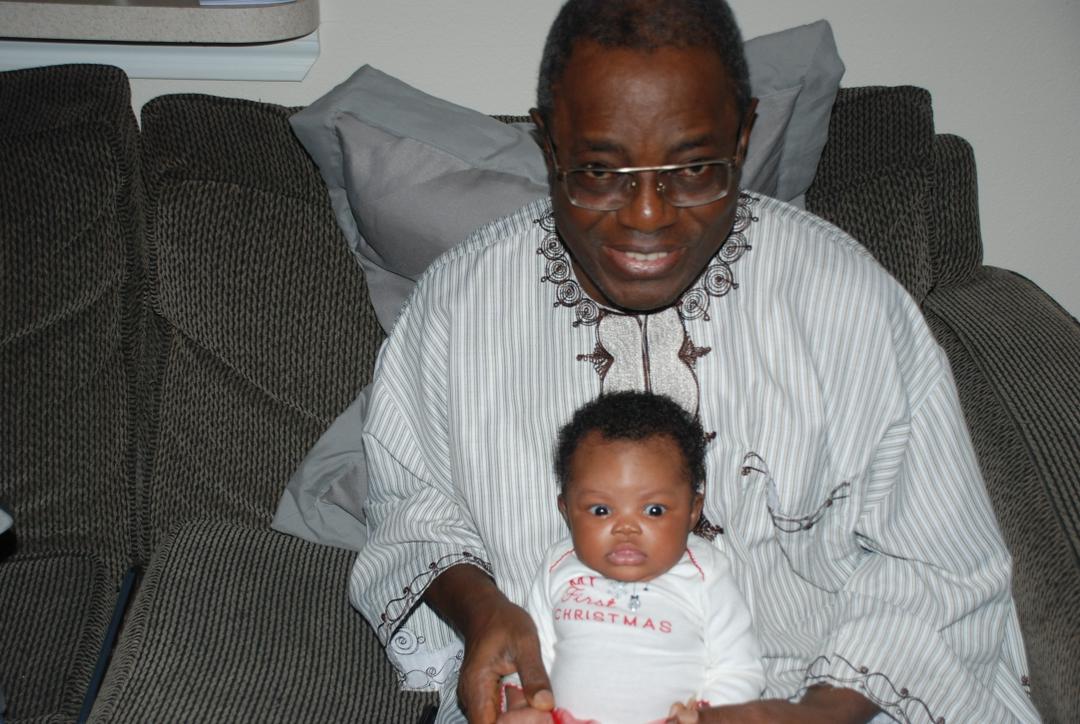
And then his grandchildren came, and he poured out even more love. I had heard stories that Grandpa never carried his own children — Tayo, Dayo, and Bayo — as babies, because he was too scared of the possibility of dropping them. But when his grandchildren came, it was different. When Damini was born, he would gently carry her and watch her for hours. He always loved taking first-born pictures with Tayo and Damini. And then the triplets came, and Grandpa was changing diapers like a professional. As the children grew older, Grandpa never missed a moment to be with them. He didn’t mind the noise or the chaos they caused when they were around him — in fact, it made him even happier and more fulfilled. He would let them wear his clothes and shoes, eat his food, play with his phone, and mess up the place, and he would just watch them with a big smile on his face.
Grandpa always made me know he was proud of me. I was his first daughter, and he made sure I was aware of that position, giving me my own decision-making rights. He was proud of my achievements and encouraged me to pursue my dreams even when it was inconvenient for him. On several occasions while I was studying abroad, Grandpa would drop everything and come with Grandma to Lagos to help me stay with the children. That meant a lot. Even though I didn’t give him the identical twins he had always dreamt of, he was proud to be the grandfather of triplets, and he said so wherever he got the chance, caring less about whoever was listening. I will never forget his kind words at my 40th birthday celebration in Egypt. Everyone kept telling me how lucky I was to have a father and mother-in-law who loved me so much and came all the way to celebrate me. I will always be grateful for that.
The last twelve months were difficult to experience. Despite all he was going through, Grandpa maintained good cheer and made sure he spent quality time with those he cared about most — his family, especially his grandchildren. We were not expecting it, but he made sure he attended my mum’s 80th birthday celebration, even though he was so weak, and stayed till the very end of the event.
Through that experience, Grandpa was loved and well cared for by his nearest and dearest — Mummy, Tayo, Dayo, and Bayo — did exceptionally well, and I know Daddy would be extremely proud of the family he built and has left behind. The love, the sacrifice, and the care were incredible — late nights, early mornings, hospital visits, surgeries, medications, trips to and from Ilesha — never giving up or getting tired. I have to specially acknowledge Grandma for being such a wonderful wife, serving Grandpa so dutifully until his last breath. I recall telling her last year to come back home quickly because Grandpa could not cope without her. He really couldn’t, and perhaps she is the reason he waited — to celebrate her 70th birthday. Grandma, thank you!
To say I would miss my father-in-law is a real understatement. He has been an integral part of my life over the last 17 years and a pillar of support to me, Tayo, and the children. We are all very sad and heartbroken, but we take comfort in knowing he has gone to be with the Lord. His legacy will live on in the family he built and the lives he touched.
Rest well, Grandpa. You will always be in our hearts.
Your first daughter,
Yetunde Falore
Your words and memories mean a great deal to the family.
If you have special moments you'd like to share with family and friends, we welcome them here.